Amongst them

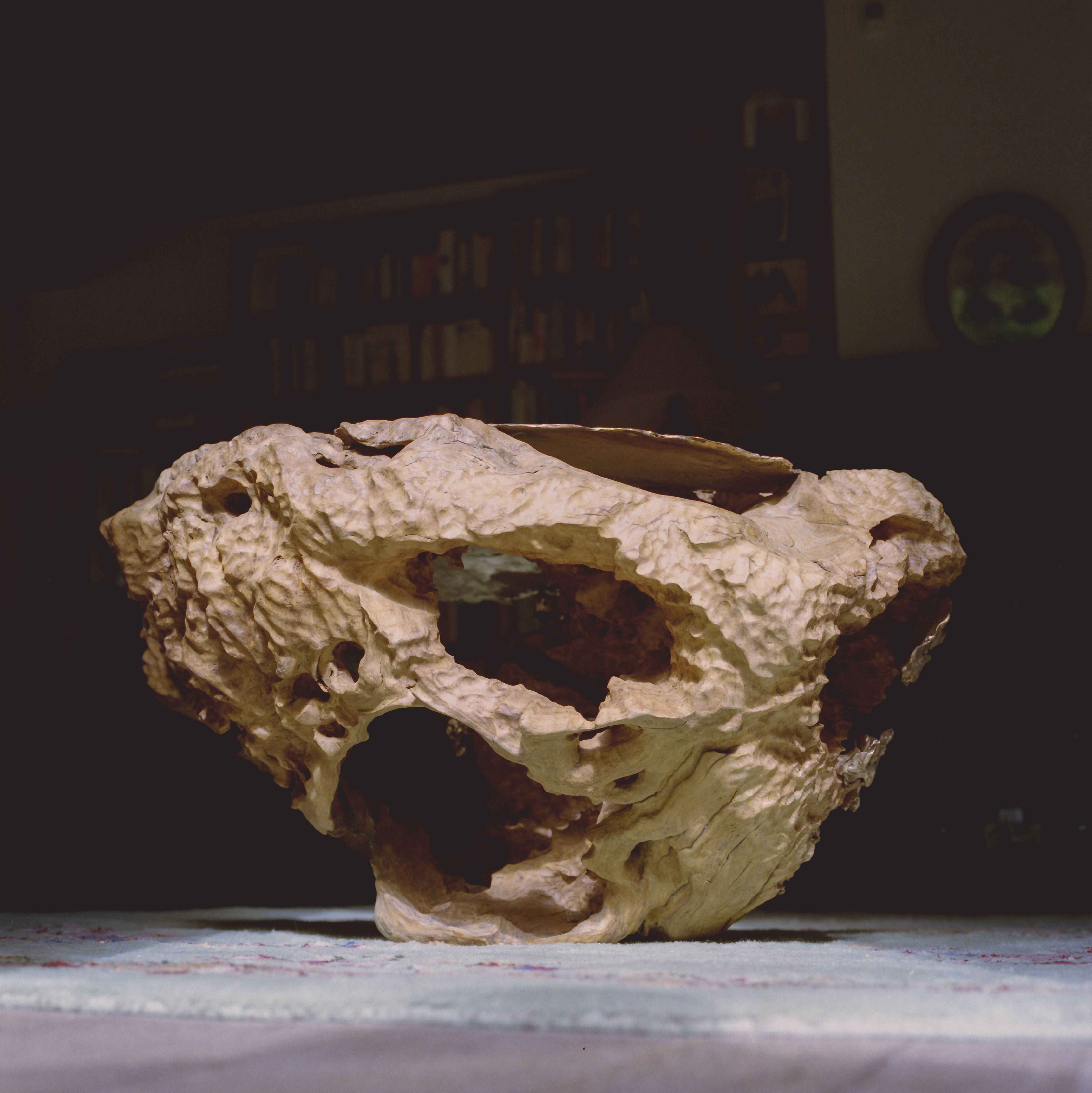
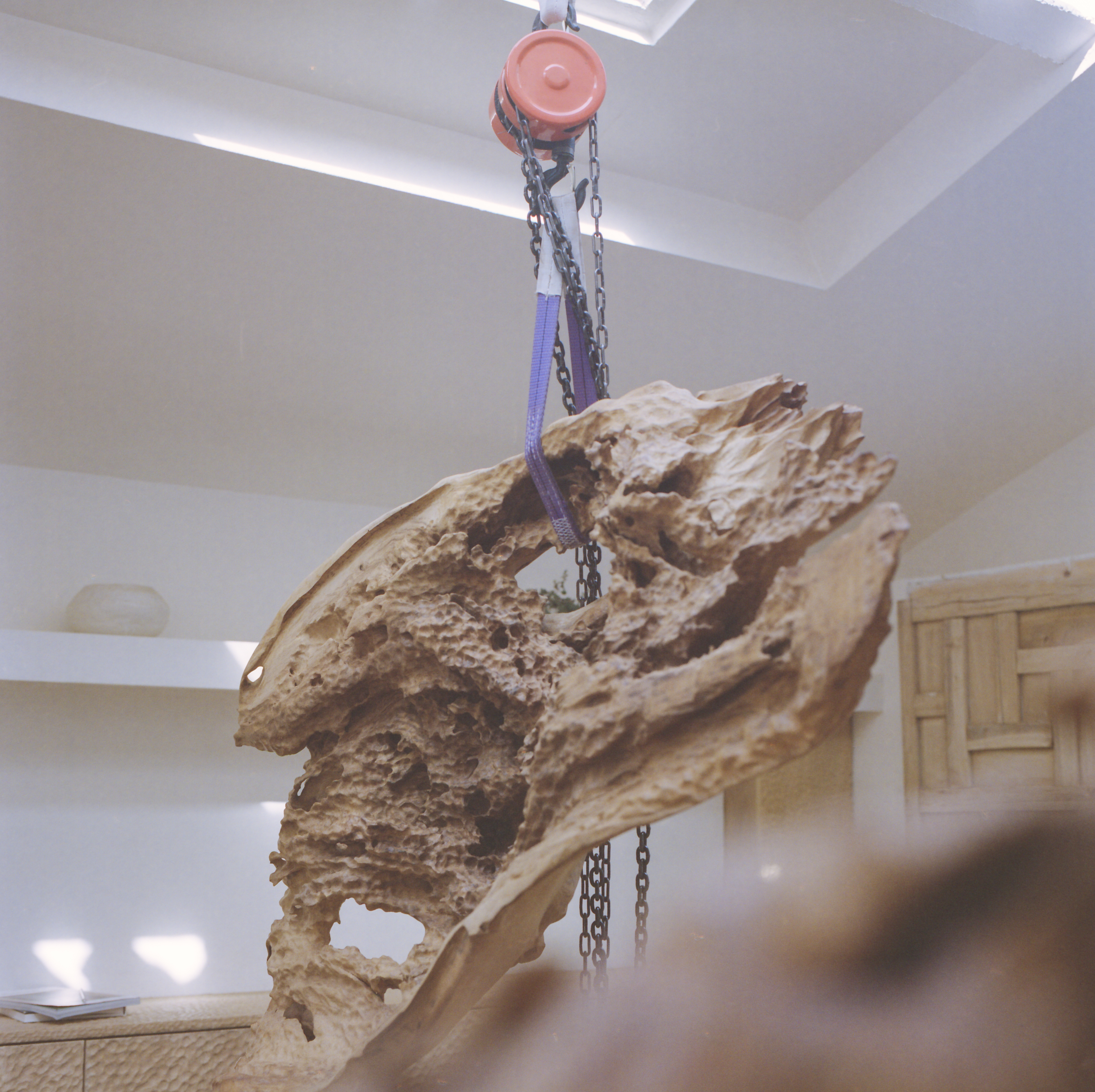
This collection is about my childhood, when I used to play among gigantic chestnut trees that were over 150 years old.
Today, as I see them falling, it is impossible for me to let them disappear.
After a long walk in the forest, it is sometimes hard to find a rock that accepts the shape of our body. When it happens, a small satisfaction emerges. Suddenly, a rock without the purpose of being a chair becomes partly a chair. As we sit on it, we begin to accept small constraints. The rock is not perfectly flat, and its texture is not easy to sit on. And yet you are happy there, in the middle of the forest, because you have found one of the few rocks or trunks that accepts you.
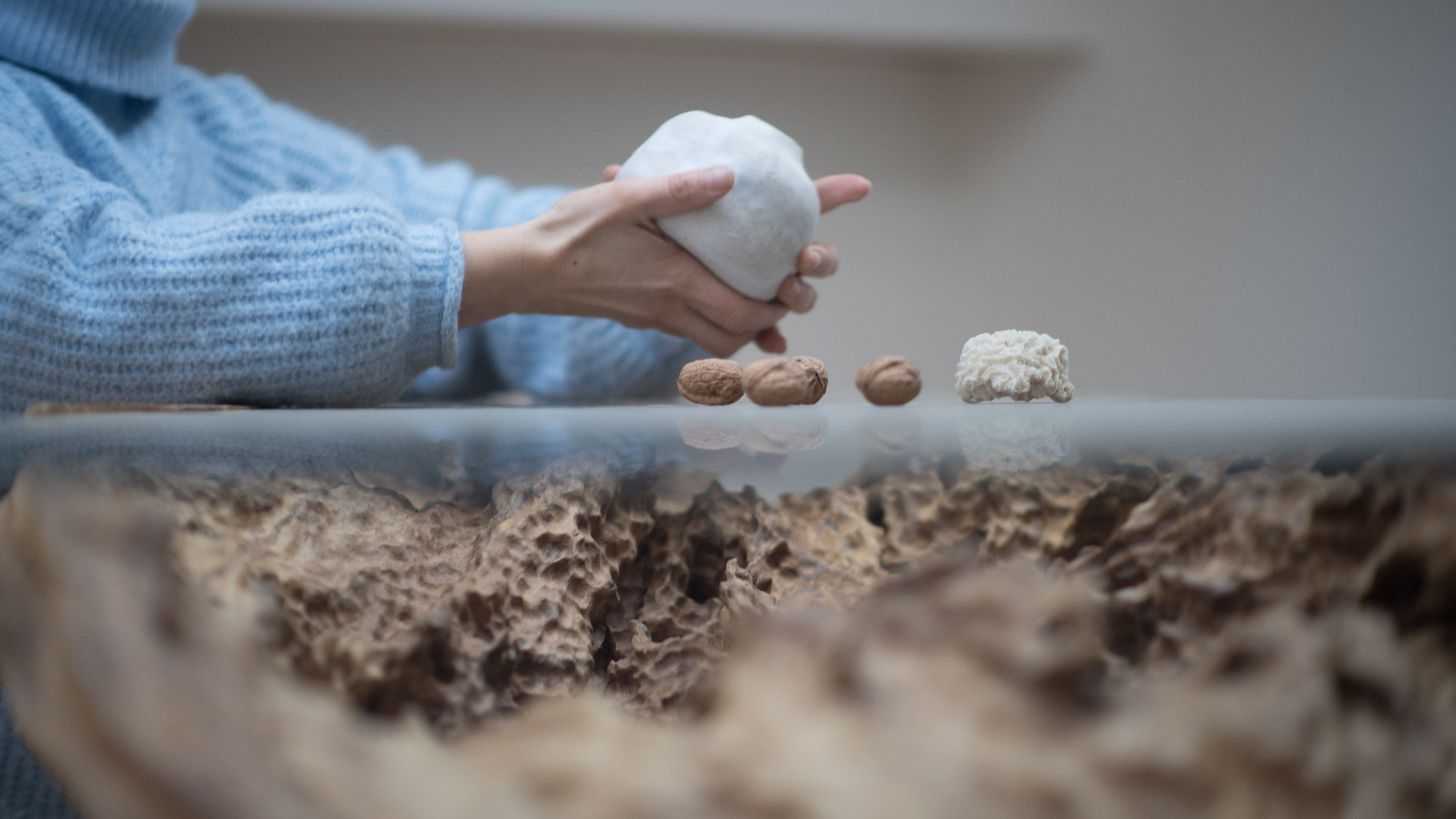
This is what I want you to feel when you interact with my pieces. I want you to feel like a humble visitor, a curious forest adventurer who suddenly finds a peculiar object in the woods one with which they can interact.
I want my furniture not to be fully usable, square, or perfectly flat. I want us to understand that we must adapt to nature and take from her only what we can or need, with the understanding that we cannot have it all. You can only use the space the rock gives you, and you must adapt to it. It is a mutual agreement an encounter, a tree with whom you share use, but mostly time and sensory experience. Utility is not the center of my creations; interaction between humankind and nature is.
In that sense, I could say my work is non-anthropocentric.
Today, as I see them falling, it is impossible for me to let them disappear.
After a long walk in the forest, it is sometimes hard to find a rock that accepts the shape of our body. When it happens, a small satisfaction emerges. Suddenly, a rock without the purpose of being a chair becomes partly a chair. As we sit on it, we begin to accept small constraints. The rock is not perfectly flat, and its texture is not easy to sit on. And yet you are happy there, in the middle of the forest, because you have found one of the few rocks or trunks that accepts you.
This is what I want you to feel when you interact with my pieces. I want you to feel like a humble visitor, a curious forest adventurer who suddenly finds a peculiar object in the woods one with which they can interact.
I want my furniture not to be fully usable, square, or perfectly flat. I want us to understand that we must adapt to nature and take from her only what we can or need, with the understanding that we cannot have it all. You can only use the space the rock gives you, and you must adapt to it. It is a mutual agreement an encounter, a tree with whom you share use, but mostly time and sensory experience. Utility is not the center of my creations; interaction between humankind and nature is.
In that sense, I could say my work is non-anthropocentric.